 Best Seller


Compressor Washing Best Practices for PT6 Engines: Extend Blade Life and Boost Efficiency in Dusty Operations
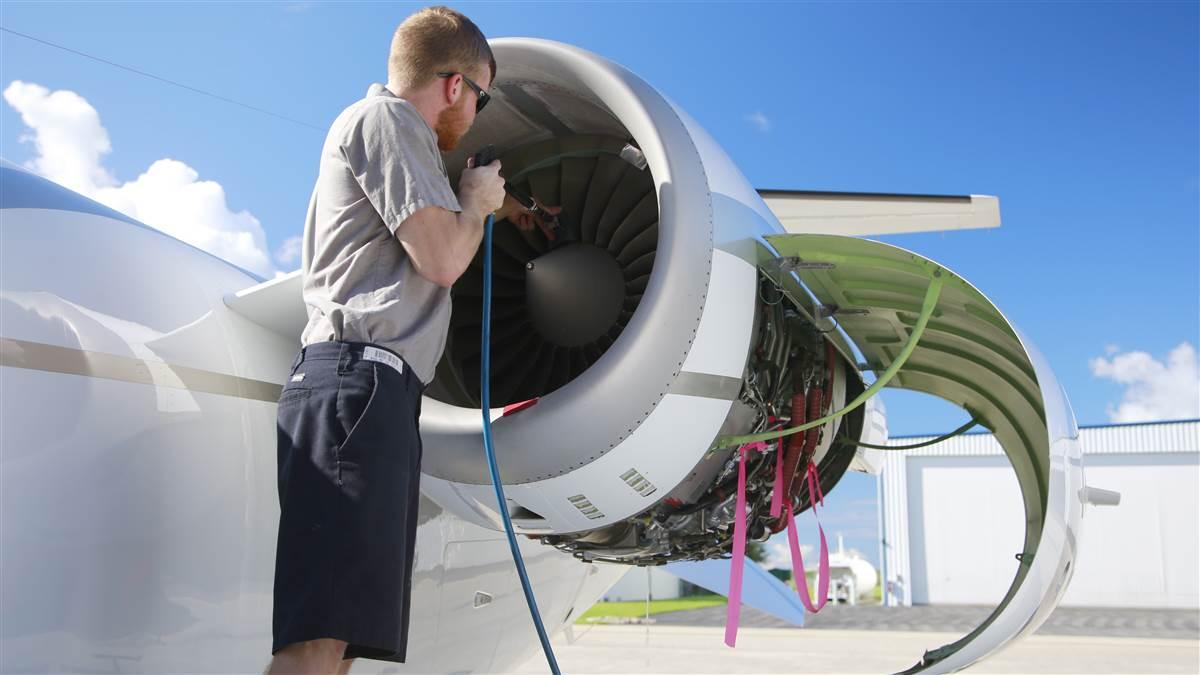
Compressor washing is one of the most cost-effective maintenance steps for PT6 operators, especially those flying in dusty airfields, coastal salt environments, or high-particulate regions. This simple procedure removes contaminants from compressor blades, restoring airflow efficiency and preventing premature wear that leads to higher ITT, fuel burn, and overhaul costs.
The Science Behind Compressor Fouling
Dust, salt crystals, oil mist, and industrial particulates stick to compressor blades, reducing their aerodynamic profile and choking airflow. In the PT6’s axial compressor stages (first 3-4 rows most affected), even 1-2% thickness buildup can raise ITT by 15-25°C and drop engine efficiency by 3-5%. For a King Air 350 burning 100 gph, that’s $5,000+ extra fuel per 1,000 hours—plus accelerated hot section erosion from hotter gas flow.
Coastal ops see salt accelerate corrosion pitting; desert bases face abrasive silica; crop dusters battle pesticides. Without washing, blades erode faster, trending toward HSI (Hot Section Inspection) limits years early.
When to Wash: Trigger Points
Scheduled: Every 100 hours (dusty/heavy ops), 200 hours (normal), or 50 hours (salt spray).

Performance Triggers: ITT rise >10°C from clean baseline, Ng drop >1%, fuel flow up 2-3%.

Visual/Borescope: Leading edge erosion, pitting, or visible fouling during 100-hour checks.

Trend Monitoring: Digital engine trend systems (e.g., JPI EDM) flag efficiency loss early.
Pro Tip: Log baseline ITT/Ng/fuel flow after every hot section or overhaul. Track post-flight to catch trends before they cascade.
Approved Fluids and Equipment
Primary Wash: Pratt & Whitney PWC 282 or Turbotect 1010 (descaling + detergent). Avoid substitutes—plain water causes corrosion.

Rinse: Deionized water only; follow with turbine rinse (dilute citric acid) to clear residue downstream.

Hardware: T0415 compressor wash kit (manifold + nozzles), 10-20 gallon tank, 100 psi pump. UTP stocks complete kits for PT6A-21 thru -135A.
Never wash in freezing temps (fluid freezes in manifold) or with hot engine (>200°C T5).
Step-by-Step Washing Procedure
Follow PWC180 maintenance manual exactly:
Prep (10 min): Ground run area clear, chocks set, cowls open. Verify no APU bleed or anti-ice.

Idle Up (5 min): Start engine, stabilize at ground idle (95-98% Ng, ITT <650°C). Monitor chip lights/oil pressure.

Compressor Wash (10 min): Spray 5-10 gallons upstream via inlet ports at 40-60 psi. Maintain Ng; expect brief ITT spike then drop.

Turbine Rinse (5 min): Switch to fresh water, 3-5 gallons. Prevents compressor residue baking onto hot section.

Dry Run (20 min): Idle 10 min, then 1,000 RPM prop 10 min. Check accessories for wash water intrusion.

Post-Check: Borescope compressor, oil filter cut if metal suspected, accessory torque (especially fuel control).
Full recovery takes 2-3 washes. First pass removes 60-70% fouling; expect 10-15°C ITT drop.
Advanced Tips for Maximum ROI
Dual Wash Cycles: Compressor wash first, shutdown 30 min, then turbine rinse on second run.

Salt Ops: Add corrosion inhibitor (Turbotect 1014) post-rinse; inspect blades weekly.

High-Hour Engines: Wash before every flight if ITT trending hot—extends time-to-HSI.

Data Logging: Record pre/post ITT, fuel flow, and saturation trend. Share with your shop for predictive maintenance.
Common Mistakes to Avoid
Over-pressurizing (>80 psi damages blades).

Skipping rinse (residue migrates to combustor).

Washing contaminated fluid (clogs nozzles).

Ignoring post-wash borescope (hidden FOD revealed).
UTP’s Role in Your Wash Program
Universal Turbine Parts stocks OEM wash kits, nozzles, T0415 manifolds, and compressor blades for immediate replacement. AOG in dusty Idaho? We ship same-day worldwide from Prattville Airport. Call 334-361-7853 for instant quotes—keeping your PT6 clean means keeping it flying.